Not all sweetness and light (2)

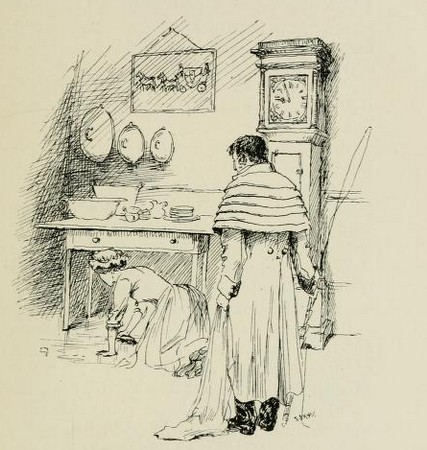
“Ah, well, there’s one good thing,” continued Sukie, rubbing the tea-caddy with her apron, “stranger he is, but he’s not one of them nasty French critturs.”

Sukie was a maid-of-all work depicted in a fictionalised account of the Hine family. The account represents the attitudes toward France during much of the early to mid-nineteenth century.

Sukie watched over by her master, Mr Hine. Illustration by Lucy Kemp-Welch from “Round About a Brighton Coach Office” by Maude Egerton King. Published 1896

Continue reading

Chargois et Burluraux à Brighton

I don’t know whether Pierre Chargois and Jean Nicolas Burluraux left Rupt-en-Woëvre in north-east France together in 1850, or even if they left at much the same time. They were both in their mid-twenties. Their small home town had a population of just 665. They may well have been related. The population was slowly declining and the two young men were part of that decline. The movement away from the countryside to the towns had begun. Pierre and Jean Nicolas had decided that they would go further than the nearest big town, Verdun.

Pierre’s father, Richard, was a merchant and had already crossed the Channel with his merchant father, Jean who was a frequent visitor to England. The two young men would sell high quality basket ware. It is likely that Jean Nicloas was a skilled basket weaver as one of the main crops in the very water-rich Rupt valley was osier or willow cane.

Osier Cutting by H. R. Robertson. Source: Life on the Upper Thames. Credit: the University of Toronto and the Internet Archive https://victorianweb.org/history/work/22.html

Continue reading

Maurice Jacobs : Teacher and French Honorary Consul

The 20th century had dawned just a few short years ago. Their son was a young teenager, so M. and Mme Léon, in Bordeaux, decided that it was high time for their lad, René, to perfect his English. The family was very internationally minded. They knew that Brighton already had an excellent reputation for good schools.  Its climate was healthy and its Jewish community was thriving.

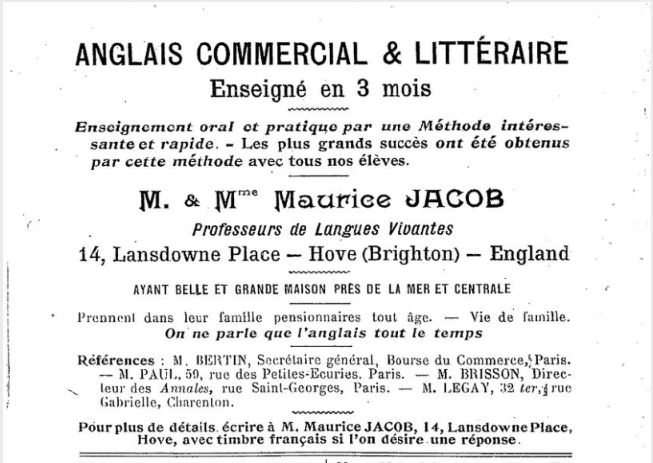
prof-de-francais-1907

© Gallica : Bulletin de la Société de la Propagation des langues étrangères en France 1906

“Ah”, said M. Léon, “there is a school in Hove that would do very well.”  So he sent off a letter of enquiry to 14 Lansdowne Place in Hove.  Alas, it came to M. Léon’s ears that this school, run by a Frenchman and his English wife, was very, very small and that it had changed address several times over the previous few years. This did not bode well.  The Léons looked elsewhere.  Then they remembered that a few years previously, they had seen an advert in the “Jewish Chronicle” for a school in Brighton.  This looked more like what they wanted:

Continue reading

Caen Stone: Part Three – 20th and 21st centuries

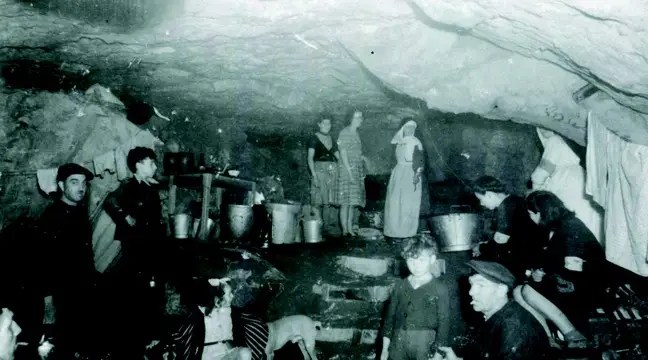
Once they became mined out, the underground quarries of Caen stone generally presented no problems.  They were excellent for producing mushrooms on a commercial basis.  However, with pressure to build for an expanding population in the mid-20th century, many of the voids had to be filled in before building could take place.  Several quarries, however, played an important and very positive role in the 1940s.  During the bombardment of Caen by the Allies in 1944 these quarries provided safe refuge.

648x360_rares-photos-montrant-civils-refugies-carriere-saingt-fleury-orne-calvados-juillet-1944-fuir-bombardements

Refugees (including dogs) from Allied bombing on Caen in June 1944. Image courtesy of “Le Parisien” newspaper.

Although nearly 2000 inhabitants of the city died within two months of the D-Day landings on 6 June, many hundreds more owed their lives to the redundant quarries where their forefathers may have worked for many generations before them.

Continue reading

Caen Stone: Part Two – 19th century

In the 11th century, the honey-coloured French limestone used in Sussex may well have come from quarries beneath the centre of the town of Caen itself. William of Normandy had his own quarry at the foot of his castle in the town.  Other quarries opened and closed over the centuries. 

Today there are over 250 hectares (600 acres) of mined galleries beneath the streets of Caen and its suburbs. In a somewhat unpatriotic statement, an inhabitant of the town has compared the area to a certain Swiss cheese: Le sous-sol de Caen est devenu un véritable gruyère constellé d’anciennes carrières. [Underground Caen has become a veritable gruyere cheese, with its constellation of ancient quarries.]

Continue reading

Caen Stone: Part One – Mediaeval

You have taken off in a small private plane from Brighton City Airport at Shoreham-by-Sea.  The plane heads directly due south.  About 40 minutes and 177 km later you pass over the coast of France at Ouistreham.  Your pilot follows the course of the river Orne.  Below you, you spot a white gash amid the pattern of green fields. 

L'Ourc Google image

The port of Ouistreham, the Orne river and its canal. In the bottom left-hand corner, the modern outskirts of Caen. (c) Google

Continue reading

Les Ateliers de Brighton

Atelier Feb 2020

Originally tucked away in Providence Place, but now chased out by re-development in London Road, this tiny shop has spread its wings and flown down to 165 Kings Road Arches.  It now goes under the name of Tutton and Young’s Atelier by the seaside.  Still a great choice for buying exquisite small works of art or booking into a course on embroidery, jewellery, drawing, painting and many more. Continue reading

Brighton goes to the Paris Exhibition

As far as is known, no Jemima ever went from Brighton to the Paris Exhibition of 1867, but if she had, these might have been her letters to her friend Emily.

* * *

Brighton,March 1867

Dearest Emily,

At last! Father has said we can go to the French Exhibition in Paris in September.  First, he says we must all improve our French.  Father is a little distrustful of the Parisians, so he says we must at least know what they are saying.  Mother and I will go to Mlle Witter in Holland Road (such a nice safe area of Hove, Father says) but Father has chosen to go to Mons. Lamette in East-street. Continue reading

‘Adieu’ or just ‘Au revoir’?

Café ROuge window Feb 2020Only eighteen months ago, the Palmeira Square area of Hove was home to several French restaurants (see blog of 5 August 2018: La Place Palmeira).  Since then, both La Cave à Fromage and Pâtisserie Valérie have closed their doors.  Now we have to say adieu to Café Rouge in Bartholomews which closed on 19 January 2020.

It was so good to see all those correctly used accents: Salon de thé and à toute heure.  Fortunately, the branch of Café Rouge at the Marina is still open and carrying on the good work.
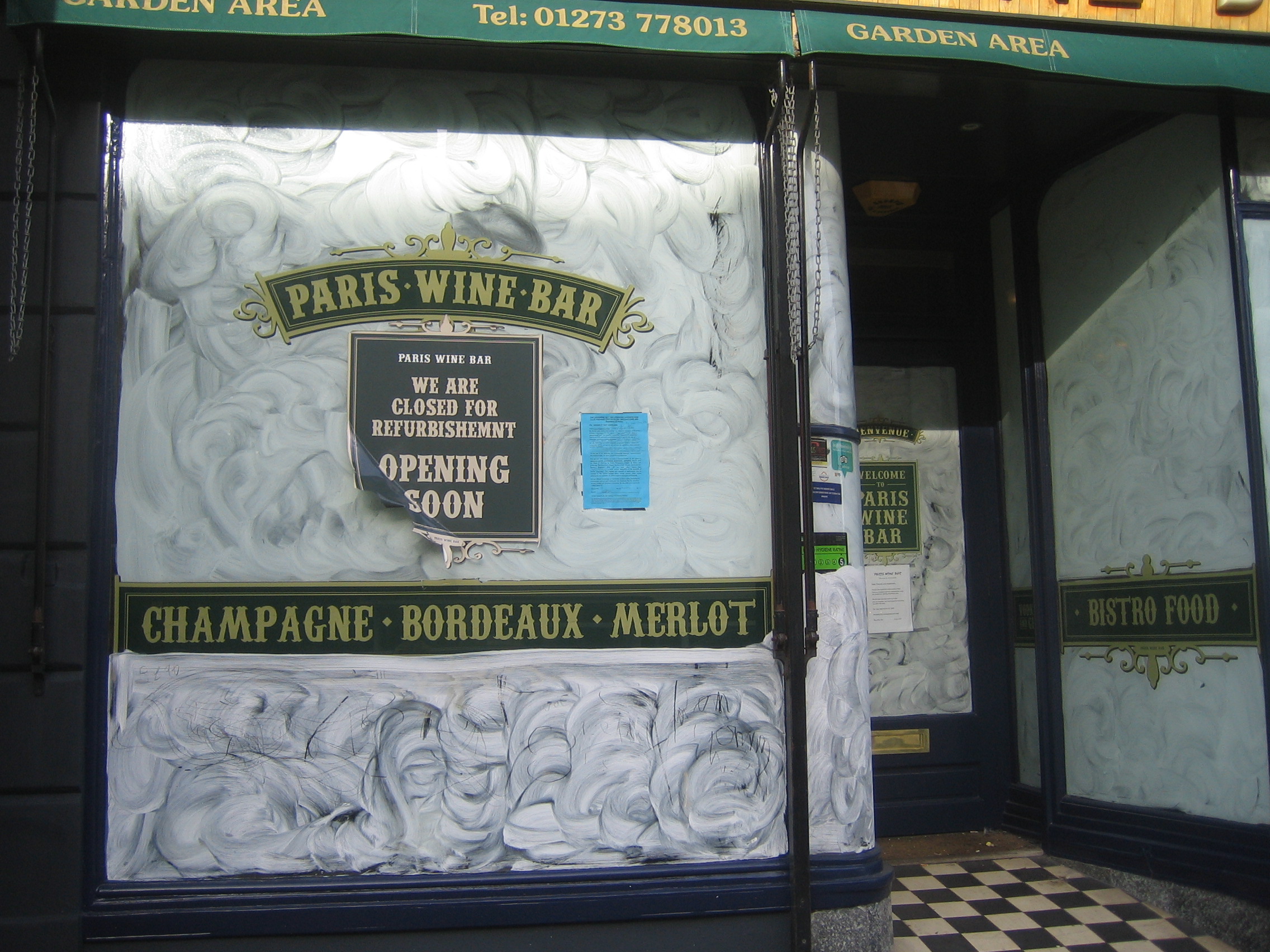
Paris Wine Bar Hove Feb 2020Another ‘French’ loss is the Paris Wine Bar at 119 Church Road, Hove.  However, according the Argus, the restaurant was “not as French as its names suggests” – but for all the best reasons.  The wines served in the bar came from all corners of world and not just France.  Is this adieu to the Paris Wine Bar or merely au revoir?  Hard to tell.  Let’s look forward to its renaissance.

Vélo ami March 2019It’s not only food outlets that like to associate themselves with la France.  Cycling and bikes are also often associated with our French neighbours.  The bike shop, Velo Ami, at 73 Portland Road closed its doors in early 2019.  A result of the harsh economic climate for retailers?  But where oh! where was that accent on vélo?


fin symbol