J.E.C Bodley, spur to the Entente Cordiale?

John Edward Courtenay Bodley moved into 24 Brunswick Terrace, Hove in 1904.   He must have liked Hove.  Within two years he had moved just 400 yards west, to 2 Adelaide Mansions, also on the seafront.

Oscar Wilde and JECBodley in 1875: Image from ‘Oscar Wilde’, by Richard Ellmann (1987)., Public domain, via Wikimedia Commons

By the time of his arrival in Hove, J. E. C. Bodley was  50 years old and a highly respected writer on France. When he died, exactly 100 years ago, on the 28th May 1925 the London Times said of him:

His magnum opus was his two volumed work on France, which in many ways paved the way for the sympathies necessary to the Entente [Cordiale of 1904], for he wrote at a time of great hostilities between the countries.

The first edition of the magnum opus in question had been published in 1898.   Since 1890 he had immersed himself in the politics, cultures and institutions of France.

So keen was his desire to get to know France that he explains in Part II of the introduction to the book:

I came to France in May 1890 and wrote the last lines of these volumes more than seven years later, having in the interval not spent seven weeks away from French soil.

We must remember that in the 1890s, following the Franco-Prussian war, Alsace and Lorraine had been lost to Germany and that Algeria was an integral part of France – not a colony but a fully fledged département.

Despite having started his professional career as a barrister, Bodley had already made friends in high places in France before 1890.  We could almost accuse him of name dropping when he lists such grandees of French literature and politics as Ernest Renan, Hyppolite Taine and Georges Clemenceau amongst his friends and acquaintances.

Bodley’s must have been pretty resilient physically.  In 1891 alone he lists staying in 16 different towns during his round-France travels – but then he was only in his late 30s and presumably quite fit.

1891 was to change his life.

After passing some months in Paris I set out again in 1891 returning to Lyons [sic] … Thence I went to Marseilles and stayed long enough to get a certain insight into the life of the composite population. Crossing to Algeria, during a long visit I was able to examine the peculiar system of administration … After a brief summer season in Paris, we …

“I” has changed to “we”.  In May 1891, 37 year old Bodley married Evelyn Frances Bell at Algiers “in the Republic of France” as it says on the marriage certificate.  The bride was just 21 years old. She was the daughter of a wealthy iron founder from Middlesborough.  Her family regularly spent the winter in Algiers and her father eventually became the British Consul General of that city.

The newspaper, Le Temps, makes a very revealing, perhaps very Gallic, comment on why this marriage might have taken place:

M. Bodley avait, jusqu’alors, voyagé seul. Cette solitude nuisait à son enquête, parce que un célibataire étranger n’est point admis facilement dans l’intimité de nos demeures, et que les familles françaises – même celles où il y a des jeunes filles à marier – sont entourées par un amoncellement de fortifications qu’on ne peut pas renverser si l’on n’est pas aidé, dans cet assaut, par une frêle main de femme. [Up to that point, Mr Bodley had travelled alone. His single state was hindering his research, for an unmarried foreigner is not easily admitted into our homes and French families – even those with marriageable daughters – are surrounded by many a battlement which cannot be overrun without the help of a wife’s delicate hand.]

Once wed, the Bodleys criss-crossed France as Bodley had done before their marriage. Following another summer break in Paris, the couple visited Le Mans, Angers, Vannes, the Morbihan region, Nantes, La Rochelle, Bordeaux, “several Pyrenean towns”, Lourdes, Carcassonne, Toulouse, Limoges. “Then we drove through George Sand’s country, lingering in many a forgotten town and village in the Creuse and the Indre”.

The word “drove” presents a conundrum.  Motor cars were in their very earliest days and unreliable on long journeys.  One of the Bodleys’ journeys was made by river, down the Rhone valley.  Le Temps, on 21 July 1901, maintained that M. Bodley se servit de nos chemins de fer, choisissant volontiers les trains omnibus qui déposent, en des localités peu connues, les voyageurs curieux.  [Mr Bodley readily uses our railways, choosing slow trains which leave the inquisitive traveller in little-known places.]  Bodley was known to dislike modern roads “filled with automobiles” (in the 1890s!).   I’m sure that any train journey they made would have been in a first class carriage.

With wonderful masculine understatement, Bodley continues: “The circumstances of my life now made prolonged journeys somewhat difficult.”  This was an oblique reference to the fact that Evelyn had given birth, in Paris, to their first child, Ronald, on 3 March 1892.  The travels did not stop.  The couple’s second son Josselin was born 17 months later at Vaux in the Hautes-Alpes.

The list of the Bodleys’ travels over the next two years makes exhausting reading.  However, by 1896 the couple had settled briefly in the chateau of Sucy-en-Brie, just 11 miles south-east of Paris.  It was in the chateau that their third child, Yveline Courtney Bodley was born.

Birth certificate of Yveline Bodley 1895. Transcript below.

Du treize décembre mil huit cent quatre vingt quinze, à midi, Acte de naissance de Bodley Yveline Courtenay du sexe féminin, née hier, douze, à dix heures dix minutes du soir au château de Sucy, domicile de ses père et mère, en cette Commune, fille légitime de Bodley John Edward Courtenay, sans profession, âgé de quarante deux ans, et de Bell Evelyn Frances, son épouse, sans profession, âgée de vingt six ans, tous deux demeurant au château de Sucy en cette Commune. Les témoins  ont été …  [On 13th December 1895, at midday, birth certificate of Bodley Yveline Courtenay (sic), girl, born yesterday, 12th at 6.10 in the evening at the chateau of Sucy, residence of her father and mother, in this district, legitimate daughter of Bodley John Edward Courtenay, of no profession, aged 42 and of Bell Evelyn Frances, his wife, of no profession, aged 26, both residing at the chateau of Sucy in this district.  The witnesses were …]

As with most of their temporary homes, the couple were renting – in this case from Henry Bruce Meux, heir to the English Meux brewing company.  Meux had inherited the chateau from his aristocratic mother, but never lived in it.
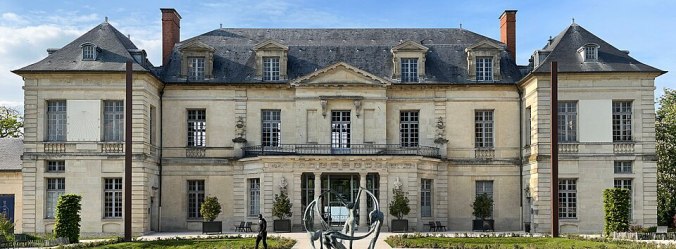
Le château de Sucy-en-Brie Image: Chabe01, CC BY-SA 4.0 <https://creativecommons.org/licenses/by-sa/4.0&gt;

When living in Sucy, Bodley was proud to reveal that “Ludovic Halévy … was my neighbour for two pleasant summers.”

Plan of Sucy-en-Brie. Image: Roland45, CC BY-SA 4.0 <https://creativecommons.org/licenses/by-sa/4.0&gt;, via Wikimedia Commons (Adapted)

Ludovic Halévy was famed as the joint librettist for most of Offenbach’s operettas and of Bizet’s Carmen.  He lived just a few yards from the chateau in a vast house called Haute Maison. Writing to his cousin, Bizet’s widow, in late August 1895, Halévy gives us a glimpse of Eveline Bodley just a few months before she gave birth to her daughter:

Sucy est plus calme , et peut-être, je crois, trop calme à notre jolie voisine, Madame Bodley. Elle a été fort surprise quand Louise lui a dit que tout dormait vers dix heures du soir … [Sucy is quieter, and perhaps, I think, too quiet for our pretty neighbour, Mrs Bodley.  She was very surprised when Louise told her that everyone was in bed by about ten in the evening …]

This portrait of Madame Bodley by Léon Bonnat  hung in the salon of the chateau in Sucy-en-Brie.
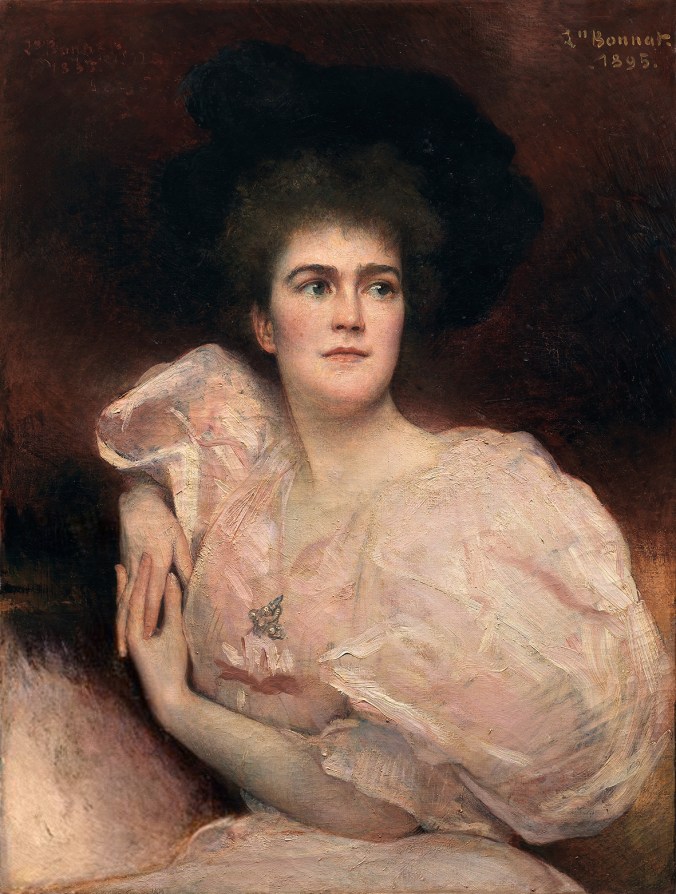
Portrait of Madame Bodely

Léon Bonnat, “Portrait d’Evelyn Frances Bodley”, 1895 (huile sur toile / H. 81,6 cm ; l. 65,4 cm / numéro d’inventaire : CM 859 / © Bayonne, musée Bonnat-Helleu / cliché A. Vaquero)

From late 1900 until 1904, the couple spent most of their time at the Château Bellefontaine in Biarritz, where on one notable occasion in April 1902, according to the New York Herald “the King honoured Mr Bodley, the author of ‘France’ and Mrs Bodley with his company at breakfast on Sunday.”  This may well have been the day on which Edward VII, as yet uncrowned, asked Bodley to write The Coronation of Edward the Seventh: A Chapter of European and Imperial History (published  in 1903)
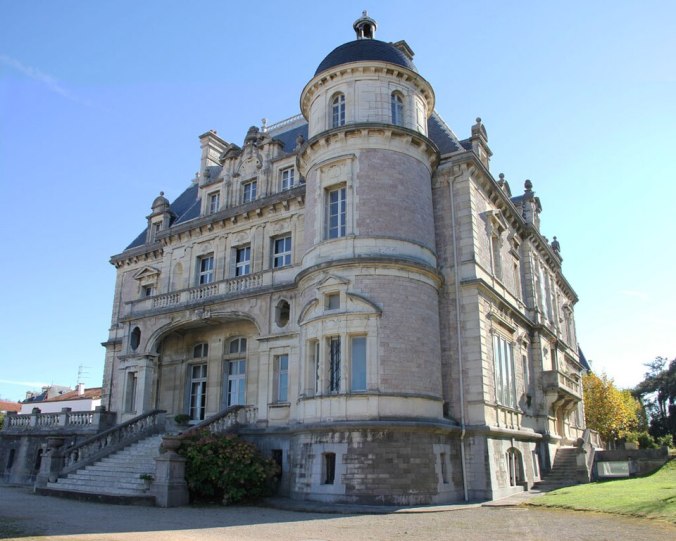
Château Bellefontaine, Biarritz. Built in 1880. Image: Remi.touja Creative Commons 4.0

There are no clues to the circumstances which brought Bodley to Hove in 1904.  This was a turbulent time in his life.  His fourth child had died, aged just 2, that September while the couple were staying at the Château Bellefontaine; in the same year, Bodley and his wife sought, acrimoniously, a divorce which was not granted.  The couple separated and by 1908, they had managed to divorce.  Their 15 year old daughter seems to have sided with her father.  The 1911 census lists Alix Yveline Ava Courtney Bodley as living at 2 Adelaide Mansions with her father and two servants.

La Folie Boulart, formerly Château Bellefontaine, now a private hotel. The house at Adelaide Mansions was extremely modest by comparison. © La Folie Boulart / M. Pierre Delalonde

2 Adelaide Mansions was advertised for sale by Maple and Co. in 1903.  It is possible that Bodley bought the house at this time, or perhaps he rented it from the purchaser.  Either way, it was a stunning property:

… the exceedingly attractive and commanding MARINE MANSION, known as 2 ADELAIDE MANSIONS, HOVE, replete with every comfort and upon which large amounts have been lavishly expended on the internal appointments and decorations which are of a most handsome and costly description. The Mansion occupies a very choice position, directly facing the sea, in the most fashionable part of Hove, opposite the private lawns to which there is right of access, is of imposing elevation and in perfect order.  It contains 11 bedrooms, large bathroom with tiled walls and floor, and Roman bath (hot and cold), and sea water supplies, wide stone staircase and secondary ditto, exceedingly elegant drawing room, 48ft. 2in. by 24ft., handsome oak-panelled dining room, 27ft. 4in. by 17ft. 7in., morning room, smoking room, very pretty winter garden,… vestibule entrance hall, lavatory, kitchen, butler’s pantry and bed room, servants’ hall and usual offices, dinner lift, electric light, gas, electric bells and speaking tubes are fitted to the mansion.
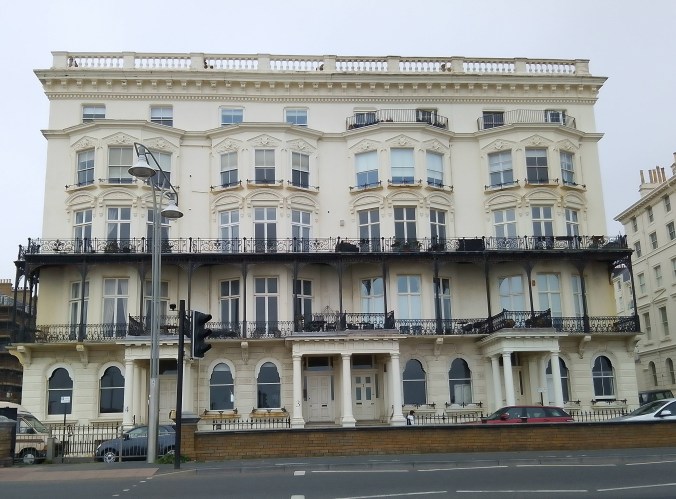
Adelaide Mansions are numbered 1 to 4 from right to left.

Why would Bodley want to live in such a large house?    Firstly, he was used to living in chateaux, staying in embassies and occupying other grand residences.  Compared to his homes in Sucy-en-Brie and in Biarritz, he was downsizing.  Secondly, it is possible that, having been a guest in so many notable French homes, he was obliged to do a great deal of reciprocal entertaining.  Alix Bodley, later Viscountess Waverly, became a society hostess admired, amongst many others, by Winston Churchill. Her skills may have been honed in Adelaide Mansions.

During his time in Hove, Bodley continued writing: 20,000 words on France for the 10th edition of the Encyclopaedia Britannica; numerous introductions to books by other writers; a two-part lecture on “The Church in France” given to the Royal Institution in 1906; L’Age Mécanique et le Déclin de l’idéalisme en France  (published in 1913) and much, much more.  Soon after the end of WW1, at about the time he left Hove, Bodley published the curiously titled “The Romance of the Battle-Line in France”.

The aim of the book was worthy.  Soldiers who had fought and suffered in France might come to be curious about the places in which they had suffered.  Those who had lost friends and family might want to know more about the place in which their loved ones had died. To some extent, Bodley was cashing in on nostalgia.

Bodley continued to live in Adelaide Mansions until about 1919.  His daughter, now known as Ava, married in February 1925, exactly three months before her father’s death… and four years after her father had married Phyllis Helen Lomax who was some 30 years Bodley’s junior.

Bodley did not live to know the grief of losing his own two youngest sons by his marriage to Phyllis: both men were in their early twenties, both were killed within six weeks of each other in 1944, John in Italy, Thomas in Belgium.  Their mother  lived until 1968 in Cuckfield, Sussex,  where her husband, John Edward Courtney Bodley, had died 43 years earlier.

Not all sweetness and light (2)

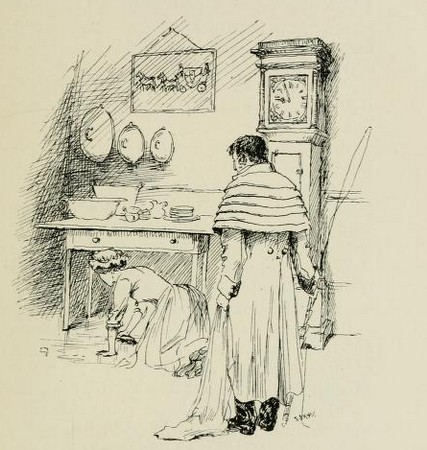
“Ah, well, there’s one good thing,” continued Sukie, rubbing the tea-caddy with her apron, “stranger he is, but he’s not one of them nasty French critturs.”

Sukie was a maid-of-all work depicted in a fictionalised account of the Hine family. The account represents the attitudes toward France during much of the early to mid-nineteenth century.

Sukie watched over by her master, Mr Hine. Illustration by Lucy Kemp-Welch from “Round About a Brighton Coach Office” by Maude Egerton King. Published 1896

Continue reading

Brighton seen by the French – 1878

In January1878, the Journal Amusant could not resist having a little fun at the expense of Brighton. Our town was, after all, a serious rival to Le Touquet (or Paris-Plage as the French know it).

First to draw the attention of Mars, the illustrator, was the entertainment on the West Pier.

THE PERFORMING FLEAS ON THE WEST PIER – The caption reads: My poor performing fleas have disappeared! Everyone here! Search yourselves!
All images are from Le Journal Amusant, 3 January 1878. Source gallica.bnf.fr / Bibliothèque nationale de France

Courtesy of Signor Ubini, performing fleas appeared for many a summer season of the 1870s on the West Pier.

Continue reading

French Cinema in Brighton (6) : North Road

By the mid-1970s, the Continentale cinema had stopped showing French films.  BBC television had  started showing them from the mid-1950s.  Jean Renoir’s ‘French Can Can’ was shown on the single-channel BBC almost as soon as it was released in 1955.  Who would show French films to a Brighton audience in Brighton?

The cinema at 64 North Street would.  Originally opened in 1911 as the Bijou Electric Empire, the tiny 400-seater cinema at the heart of Brighton’s shopping area evolved over the years.

Image Courtesy of Mike Blakemore via Creative Commons

Continue reading

Chargois et Burluraux à Brighton

I don’t know whether Pierre Chargois and Jean Nicolas Burluraux left Rupt-en-Woëvre in north-east France together in 1850, or even if they left at much the same time. They were both in their mid-twenties. Their small home town had a population of just 665. They may well have been related. The population was slowly declining and the two young men were part of that decline. The movement away from the countryside to the towns had begun. Pierre and Jean Nicolas had decided that they would go further than the nearest big town, Verdun.

Pierre’s father, Richard, was a merchant and had already crossed the Channel with his merchant father, Jean who was a frequent visitor to England. The two young men would sell high quality basket ware. It is likely that Jean Nicloas was a skilled basket weaver as one of the main crops in the very water-rich Rupt valley was osier or willow cane.

Osier Cutting by H. R. Robertson. Source: Life on the Upper Thames. Credit: the University of Toronto and the Internet Archive https://victorianweb.org/history/work/22.html

Continue reading

The marquis de Conflans and a pub in Hove

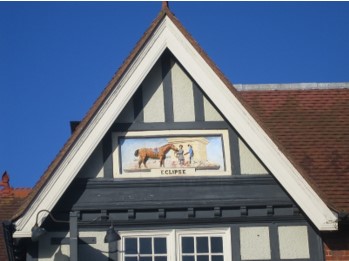
When you next pass The Poets’ Corner pub in Montgomery Road, Hove, look up. At roof level you will see two effigies of racehorses. The one below is Eclipse.

The Poets' Corner pub and Eclipse

Eclipse was one of the greatest horses of the latter years of the 18th century, both as a racer and at stud. He started his racing career aged five in 1769, but was retired young, after a mere 18 races, because not only was he undefeated, but he won his races by such a large margin that no other owners would enter their horses against him. The only time he won a race in Sussex was at the Lewes course in July 1769.

Continue reading

French Cinema in Brighton (5) 1946-1985

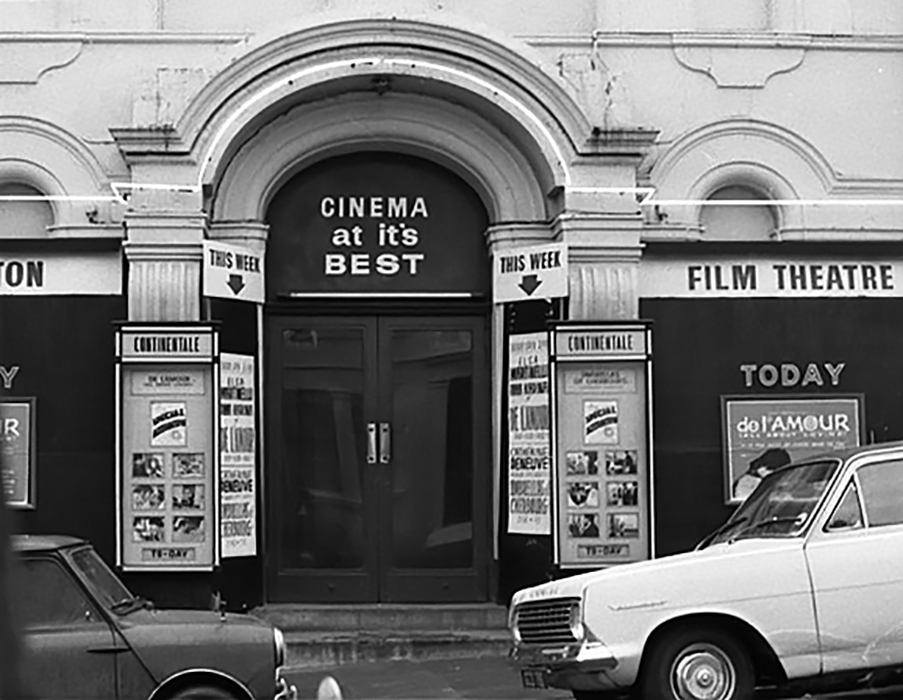
When Roger and I settled down in our cinema seats we were in for rather a surprise.  The date was Wednesday 2 August 1972.  We were at the Continentale Cinema in Sudeley Place, Brighton.  The film was Le souffle au cœur [‘Murmurs of the Heart’ aka ‘Dearest Love’].  The film was billed as a comedy-drama.  We, (an ‘old’ married couple in our late 20s) were rather taken aback by the scenes of incest toward the end of the film – despite it being “all done in the best of possible taste”. 

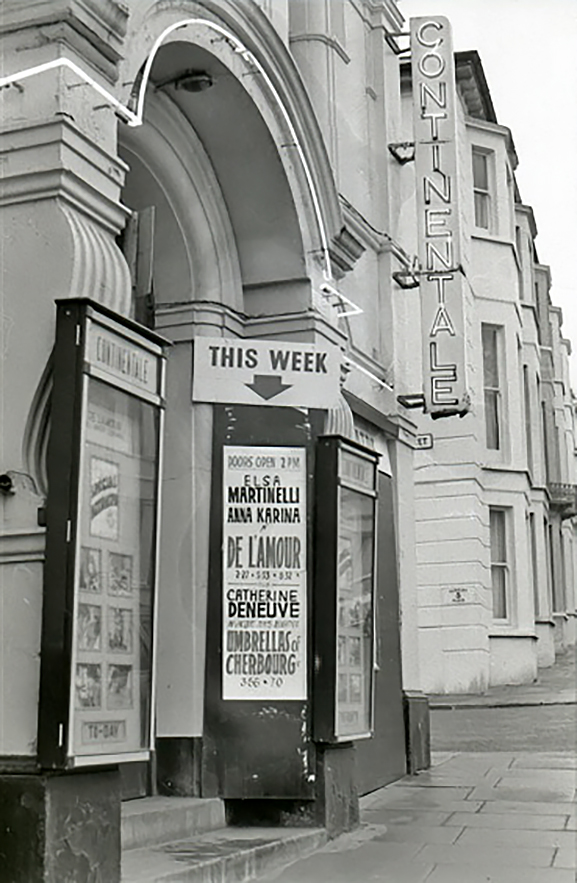
Entrance to small cinema 1960s

Continentale Cinema, Sudeley Place about 1961 © Rosalind Davidson

Read more: French Cinema in Brighton (5) 1946-1985

The Continentale had opened originally as The Sudeley Place Picture House in the 1920s. Later, when the theatre went by the name of The Playhouse Cinema, one of the first films screened in June 1949 was “the prize French film l’Idiot” with the ravishingly handsome Gérard Philippe and Edwige Feuillère.  A month later, Pierre Fresnay was appearing in La Fille du Diable. More French films followed in the next couple of years.

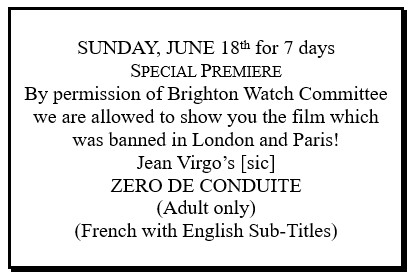
Admittedly, the Playhouse Cinema had a bit of a reputation for ‘naughty’ French films.  Perhaps we can blame the Watch Committee of Brighton for that.  In mid-June 1950, the cinema was showing Jean Vigo’s Zéro de conduite. The advert for the film which appeared in the Worthing Herald was unusual (or inspired to catch a certain kind of audience):

Later that same week, the minutes of the Watch Committee recorded that:

“The Chief Constable [of Brighton] presented a report dated 27 June 1950 on the film Zéro de Conduite which was showing at the Playhouse, Sudeley Place, Brighton.  Resolved: that in future, whenever applications are received to show uncensored films, the Town Clerk be instructed to enquire of the British Board of Film Censors the reason for the refusal to issue a certificate.” (Watch Committee Minutes DB/B/12/49)

So the Watch Committee seems to have been hedging its bets along the lines of “we will allow the film to be shown, but just in case there are any complaints, we’ll cover our backs.”

In 1951, the Playhouse became the Continentale.  This was distasteful to some, exciting to others.  It might mean (possibly sexually explicit) French films.  One of the first films to be shown, in March 1952 was Plus de vacances pour le bon Dieu (1949)The film was advertised with the French title – none of this hiding behind an English translation. Granny need not have worried.  This film was about a group of Parisian urchins out to kidnap a dog to amuse themselves during the long summer holidays.  No nudity, a little drama and a happy ending. The film had been classified as “Certificate A” (not suitable for children under 16 years old) … but then, Disney’s “Snow White” had also been deemed “A Cert” by the censor a few years earlier. 

It must be assumed that Plus de vacances was subtitled.  Hardly likely to attract the local urchins in Kemp Town.  However, in the following week, local Francophiles would have been able to decipher this offering: advertised as ‘Caroline Sherie’, those in the know would have been delighted to point out that the name of the film was Caroline Chérie (1951), an historical comedy that comes nowhere near the bodice-rippers that were thought to be connected to French cinema. ‘Art films’ were a staple of the Continentale with films by Marcel Carné, Jean Cocteau, Marcel Pagnol, René Clair, Jacques Becker and Julien Duvivier.  However, films by these cinéastes were often accompanied by films with titles such as ‘Flesh and Fantasy” (1943) and ‘Isle of Sinners’ (Dieu a besoin des Hommes, 1950) neither of which was nearly as shocking as Granny may have thought.  

Whereas the 1960s was to be the decade of the French cinema auteur, the 1950s were still dominated by actors such as Louis Jouvet, Fernandel, Raimu (the complete Marseille trilogy of Marius, Fanny and César was shown at the Continentale in 1953), Jean Gabin, Simone Signoret and Arletty.

1954 saw a modest acceptance of French films in the more “popular” cinemas.  Jacques Tati’s Les vacances de M. Hulot (1953), a largely silent film with English voice-over by Christopher Lee, had arrived in Brighton at the Astoria by April 1954.  Being more sophisticated than the Odeon, the Continentale had already screened Tati’s Jour de Fête (1949) in November 1953 along with Pépé le Moko (1937), starring Jean Gabin.  It is hard to find another French film in mainstream Brighton and Hove cinemas until September 1959 when Jacques Tati’s most recent film (at the time), Mon Oncle, was put on at the Odeon in West Street.

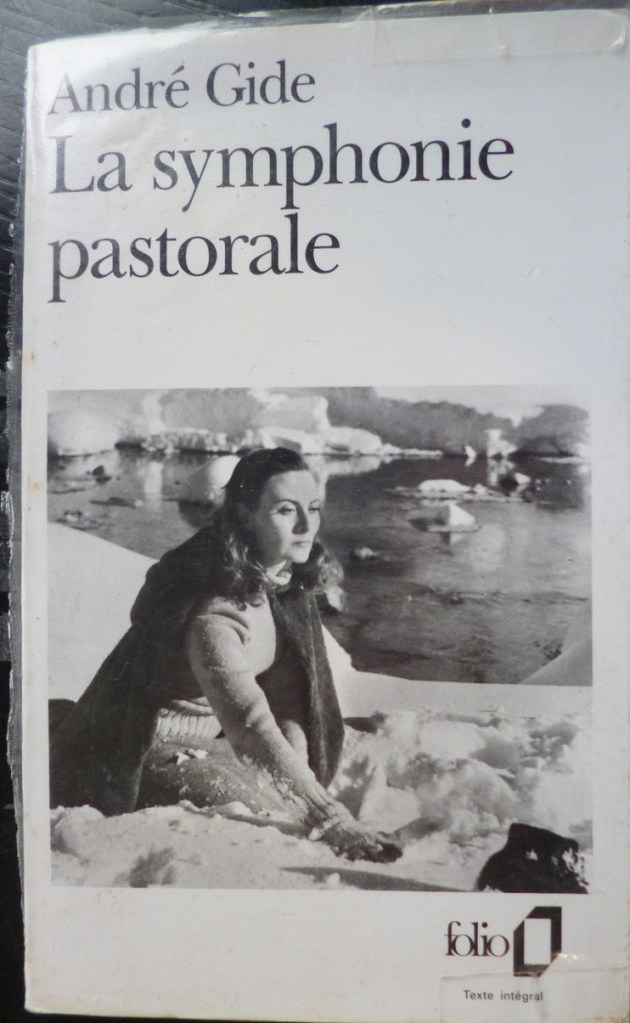
In the mid-1950s, the ‘naughty’ Continentale was showing films such as La Symphonie Pastorale (1946, Certificate A) based on the novel of the same name by André Gide. By the 1960s, the novel had become a set text for A-Level students studying French, many of whom would have later been shown the film at school.

A well-thumbed teacher’s copy (mine) of La Symphonie Pastorale featuring Michèle Morgan in a clip from the film © S. Hinton

Cover of a book with girl sitting in snow

As far as French films were concerned, the Continentale was given a run for its money by the Paris Continental cinema in New Road.

In the last week of August 1957 from Sunday to Wednesday at the Paris Continental you could watch ‘A Pig across Paris’ also known in its country of origin as La traversée de Paris (1956)The film had nothing to do with farming or livestock. It was “a cynical and unconventional portrayal” of black-marketeering during the Occupation of France.  And it was a comedy. From Thursday to Saturday, the supporting short was the wonderful fantasy of childhood Le ballon rouge [‘The Red Balloon’].

The front cover of my copy of Le ballon rouge

1959 was the year of the birth of the Nouvelle vague [French New Wave] of adventurous young film makers such as François Truffaut, Jean-Luc Godard, Eric Rohmer and Claude Chabrol.  It would appear that the Paris Continental Cinema in New Road, Brighton pipped the Continentale to the post in first showing a New Wave film: ‘The 400 blows’ (Les 400 coups 1959 directed by François Truffaut) was shown on 2 September 1960 but for one day only.  The film must have been successful with Brighton audiences.  The Paris Continental programmed the film again, but this time for a full seven days, in July 1961.

There was clearly some anxiety amongst cinema managers as far as French films were concerned.  A cinema manager wanted to ensure that he was not overstepping the mark by showing risqué French films. On 24 March 1958, he brought in our old friends, the Watch Committeeto watch Femmes de Paris (1953).  The committee “visited the Continentale Cinema, Sudeley Place, and viewed privately the above mentioned film prior to considering an application from Mr G H Fernie, Manager of the Paris Cinema, for permission to show the film in Brighton in April next.”  Permission was given as an ‘A’ certificate film: at the time, the A certificate merely meant that a child under 12 had to be accompanied by an adult – this was later replaced by the ‘Parental Guidance’ certificate.

It was indeed the Paris Continental and not the Continentale which showed the film on several weeks between June and December 1958.  Possibly the minute secretary at that Town Hall meeting had got his or her cinemas mixed up.

The British ambivalence about sex is clearly shown in a review of Femmes de Paris:

“… this must surely be the dizziest, funniest naughtiest film ever to be shown in Eastbourne.  Crammed with pretty girls, who bare themselves at the slightest pretext … “Femmes de Paris” is the most tintillating [sic] spectacle imaginable.  Apart from making cinema history in Britain by showing nudes who move, the daring film is hilariously funny…” Eastbourne Express 7 June 1958

Brighton and Eastbourne did not really seem to share the same angst as other parts of the country.

Les Femmes de Paris was still showing at the Paris Continental in December 1958 – and was programmed with the cheeky Clochemerle ­– an X-rated film (“Explicit Content – For public exhibition when no one under 18 present”).  Clochemerle is based on the novel of the same name.  The basic story is very Gallic:  the Socialist mayor of the town of Clochemerle wishes to construct a public convenience directly behind the parish church; the incumbent priest will do all he possibly can to thwart the plan.

At the same time as Les Femmes de Paris was being shown at the Paris Continental, in 1958, the Continentale in Sudeley Place was showing much tamer fare: ‘The Bells of St Mary’s’ with crooner Bing Crosby.

Brigitte Bardot hit the screen of the Paris Continental with her first film Et Dieu créa la femme (1956), but not until February 1959, by which time it had already been screened in Hove, Hailsham and Horsham. But then most cinemas, suburban or otherwise, seemed only too keen to show films featuring the ‘sex kitten’ of the 1950s and 60s.

The Paris Continenal cinema in 1963.  Closed and awaiting demolition. Image courtesy of the Regency Society

A old, ornate cinema prior to demolition in 1961
Cinema with posters for French films

It was however, the Continentale which was the flagship for French films in Brighton.  Students from the local Art College, the College of Technology and the newly founded University of Sussex at Falmer seem to have been keen cinemagoers, as they recount on the My Brighton and Hove website.  

Continentale Cinema, Sudeley Place about 1961 © Rosalind Davidson

The Sussex Daily News had a very observant film reviewer.  He (less likely she) spotted that, not only was the Continentale showing a filmed version of Verdi’s opera ‘Il Trovatore’ but that:

In the same programme, however, is a little gem which no one who has not yet seen it is advised to miss [sic].  This is a sparkling French comedy called “Drole de Drame,” which puts it right into the front rank of its kind.  There are most worthy performances from M. Louis Jouvet, M. Jean-Louis Barrault and Mlle. Françoise Rosay to name a few.

Unfortunately for the Continentale, as local cinema historian David Fisher points out, after extensive refurbishment in 1965 the cinema’s programmes changed “to art-house films in the evening, pornographic films in the afternoon.”  By 1969 the cinema was showing mainly X-rated films (no admittance to patrons under 18 years old!). 

However, even then, when for example the first of the Angélique series (1964) or Mon Amour, Mon Amour (1967) reached the Continentale in January 1969 and February 1970 respectively, not only were they French-language films but, perhaps more surprisingly, the original French names were posted on the advertising boards and in the newspapers.  Both, of course, would have shocked Granny terribly. The irony is that the latter, at least, has become somewhat of a classic, being both a rare film to be directed by a woman (Nadine Trintignant) in the 1960s, and one of the first roles for later superstar Jean-Louis Trintignant.

By the mid-1970s, programmes at the Continentale tended to be characterised by programmes such as this one for the week of August 1974 (same film both afternoon and evening):

  • In Love with Sex (English, X-rated);
  • Hot and Naked’ [Quand les filles se déchaînent ] (French, X-rated);
  • Quiet days in Clichy (Danish, X-rated)
  • Cold Blooded Beast (Italian horror, X-rated).
  • And my own favourite title? It was difficult to choose between these two which I spotted in the listings for late 1986: ‘Knickerbockerless’ and ‘Sister Susie’s Sexsations’.

The Continentale “closed until further notice” in late December 1986. That “further notice” never came.

So in the 1970s, where could the cinephiles and Francophiles of Brighton and Hove go to get their “fix” other than by watching television? To be continued.

Louis Victor Lacroix – Brighton Police Fire Brigade Superintendent

What brought Edouard Victor Lacroix and his French wife, Mary, from Jersey to settle in Brighton? In Jersey, Edouard had been a locksmith and then a tin smith.  Mary dealt in local produce.  When the couple arrived in Brighton in the very early 1860s, the town was burgeoning.  There must have been plenty of work for a man with Edouard’s skills, and yet by the end of the decade he had adopted his wife’s trade and settled with her and their expanding brood of children at 12 Bartholomews.

BARTHOLOMEWS

12, Bartholomews (middle house) now vanished under the north side of the Leonardo Hotel. Image courtesy of the Regency Society (James Gray Collection) JG_09_047

Continue reading

Le Sidaner and the Brighton Art Critic

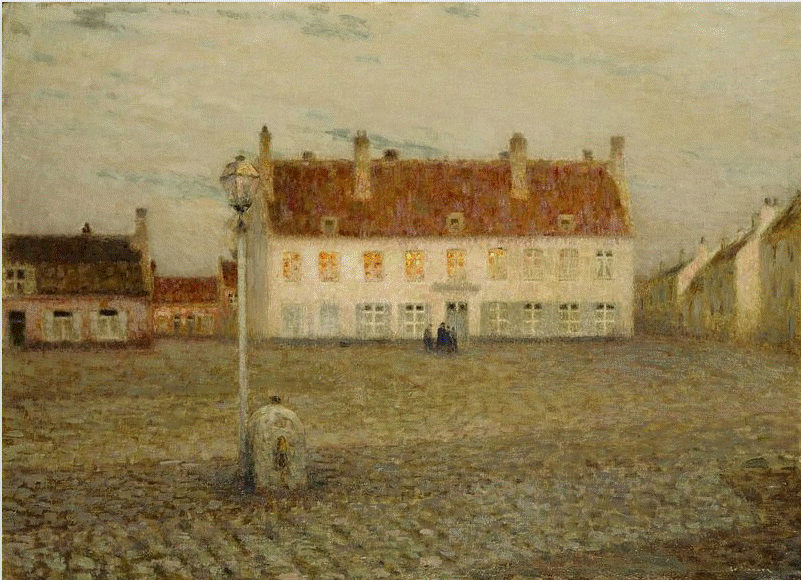
Henri Le Sidaner, a French “intimiste” painter, first came to the attention of the British public when a handful of his paintings were shown at the Goupil Galleries in London in 1903.  He had just turned 40 and was already established in France. British art critics, especially the Scots, were enthusiastic about what they saw: “The whole is delicate and mystical” (Dundee Courier), “the delicate refinement of the vision” (Country Life).  There was one note of disappointment, from the pen of N.H.C., art correspondent of the Brighton Gazette.

Le Sidaner Twilight Henri Le Sidaner « La Place » 1902 Collection & image © Hugh Lane Gallery. Donated by Henri Eugene Le Sidaner (1908)

Continue reading

French cinema in Brighton (4): 1928-1945

The talkies arrived in Brighton in the first week of July 1929 (about 10 days after they had arrived at the Rivoli in Worthing).  What had been needed to get this up and running?  At the Palladium on Brighton seafront “Six engineers have been engaged constantly on the task and a special screen has been provided and a new generator installed with the object of producing a picture which will give the highest satisfaction.” Mid Sussex Times of 2 July 1929. The film on offer, “The Doctor’s Secret” (1929, USA).

A cinema in 1930 advertising "talkies" and silent films

The Scala in Western Road. By November 1932 the cinema had been renamed Regal. Image courtesy of the Royal Pavilion and Museums Trust

Continue reading